Autumn/winter throws are on shelves now, but the orders that fill those shelves next year are placed over the coming months. For wholesale and retail importers in the UK, USA, Europe and Australia, that makes Q4 the right time to shortlist a throw blanket manufacturer in India and sort out specs, sampling and timelines before capacity tightens.
This guide covers why Panipat is worth a look, which specifications to agree before you send an RFQ, and how to check a supplier.
Why Panipat for Throws and Blankets
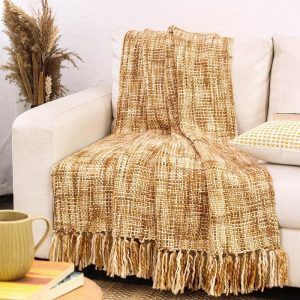
Panipat in Haryana has long been known as India’s “handloom city”, and today it is also one of the world’s biggest textile recycling centres. According to The Tribune (July 2025), around 200 spinning mills in the district recycle roughly 300 tonnes of discarded cloth every day, and 80–90% of the recycled yarn made there is exported. That yarn goes into blankets, shawls, bath mats, bed covers and floor coverings, all within the same cluster.
For a throw buyer, this means three things:
- Short supply chains. Yarn spinning, dyeing, weaving and finishing are all close together, so there are fewer hand-offs between vendors.
- Recycled-content options. Recycled cotton and blended yarns are already part of the local supply base, not a special request.
- A large cluster. Blitz India Media (April 2026) puts Panipat’s hosiery and home-textile industry at more than $4 billion, which gives buyers depth when they need backup capacity or trims.
Where the Market Is Heading
Grand View Research estimates the global blanket market at about USD 19.5 billion in 2026, growing at a 7.5% CAGR through 2030. It names North America as the fastest-growing region and points to home décor spending and cold winters in Europe as demand drivers. For importers, that growth tends to show up as more SKUs per season, more color stories and tighter delivery windows, all of which favor suppliers who can sample quickly and scale reliably.
Specifications to Agree Before You Request a Quote
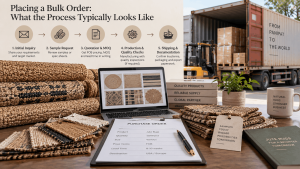
A clear spec sheet gets you comparable quotes and fewer sampling rounds. Pin these down first:
Fiber and yarn
Cotton, recycled cotton blends, acrylic and wool blends each behave differently in hand feel, weight and wash performance. Say whether recycled content is required and what proof you need.
Construction
Woven, knitted, jacquard and textured weaves all affect price and lead time. Not every design is handloom. At More Textiles, the construction method depends on the design and material: some pieces are handloom, others machine-assisted. Agree the method in writing so the bulk order matches the approved sample.
Weight, size and finish
Specify target GSM or finished weight, finished dimensions with tolerances, and edge details such as fringes, tassels, pom-poms or hemmed edges. Finish affects both labour cost and shrinkage.
Labelling and packaging
Private label care labels, swing tags, belly bands, polybags and carton marks should all be confirmed at the sampling stage, not after bulk production has started.
Planning Your Order Timeline
Work backwards from your in-store date. Autumn/winter throws usually need to land ahead of the September–November selling window, so allow time for sampling, approvals, bulk production, inspection and ocean freight.
Ask every supplier to confirm in writing the MOQ per design and colourway, the sampling turnaround, the bulk lead time after approval, and the capacity available for your category. Share your target quantities with us and we’ll confirm all four for your programme.
Also plan around the Indian festival season. Diwali-period holidays can slow production in October–November, so lock in approvals before then.
How to Verify a Throw Supplier
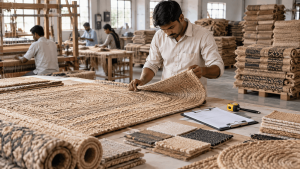
Before you place an order, check:
- Management systems. More Textiles is ISO Certified. Ask any supplier which standard it holds and which processes it covers.
- Trading track record. More Textiles is an Alibaba Trusted Seller, so buyers can review its verified company profile and transaction history before first contact.
- Testing to your market’s requirements. Share your retailer’s test protocol (colourfastness, pilling, flammability where relevant) and agree who pays for third-party lab testing.
- Pre-shipment inspection. Book an independent inspection against the approved sample and AQL level.
Trade Terms Worth Watching
Duty affects landed cost as much as the factory price does. The India–UK Comprehensive Economic and Trade Agreement came into force in July 2026 and removed duties on home textiles and carpets from India. Before the agreement, textile duties ran as high as 12%, according to Global Textile Times. That gives UK importers a clear cost reason to take a fresh look at Indian throws.
US duty rates on Indian goods have changed several times since 2025 and are still unsettled. Confirm the current HTS rate with your customs broker before you finalise costings.
Start With a Sample Set
A good first step is a small development order: a few constructions in your core colourways, costed to your spec sheet. That shows you the handfeel, finish quality and communication before you commit to volume.
Contact More Textiles
Send your spec sheet or reference images and we’ll come back with a sampling plan for your next season.
- Email: info@moretextiles.com
- Phone / WhatsApp: +91 72067 74220
- Address: Plot No. 273, Sector 25, Part 2, HUDA, Panipat, Haryana 132103, India
- B2B enquiries: moretextiles.com/contact-us
- Alibaba store: moretextiles.trustpass.alibaba.com
Leave a Reply