A rug quality control checklist is most useful when it describes the order you actually placed. “Good quality” is not a measurable instruction. Buyers and suppliers need agreed references for size, colour, construction, finishing, labels and packing before the shipment is ready.
Build the checklist from the purchase specification and approved sample. Use it to record observations, supporting photographs, decisions and any corrective work. The aim is to identify differences while there is still an opportunity to resolve them, rather than relying on a general assurance at dispatch.
Begin with the correct approval documents
Put the purchase order, latest specification, approved artwork and sample reference together. Check that design codes, colour names and size descriptions match across the documents. If the border width changed during sampling, the inspection team needs the revised version rather than the original design sheet.
Specify who can approve a deviation and how it will be recorded. A factory contact, buying team and independent inspector may each have different responsibilities. Decide the escalation route before inspection begins so that a disputed point does not become an informal verbal agreement.
For orders combining several materials, keep construction-specific requirements separate. The existing jute-versus-cotton rug guide provides a starting point for the material discussion; the approved purchase specification should determine the checks applied to each SKU.
1. Confirm product identity and assortment
Match the physical products to the order by design, size, colour and quantity. Check the product label and carton marking against the same reference. A rug that passes a visual review can still be the wrong item for the carton or customer order.
For mixed cartons, verify the agreed assortment rather than only the total piece count. Record any substitutions for buyer review. If two shades are visually similar, use the approved reference codes and physical samples to reduce confusion.
2. Measure dimensions using the agreed method
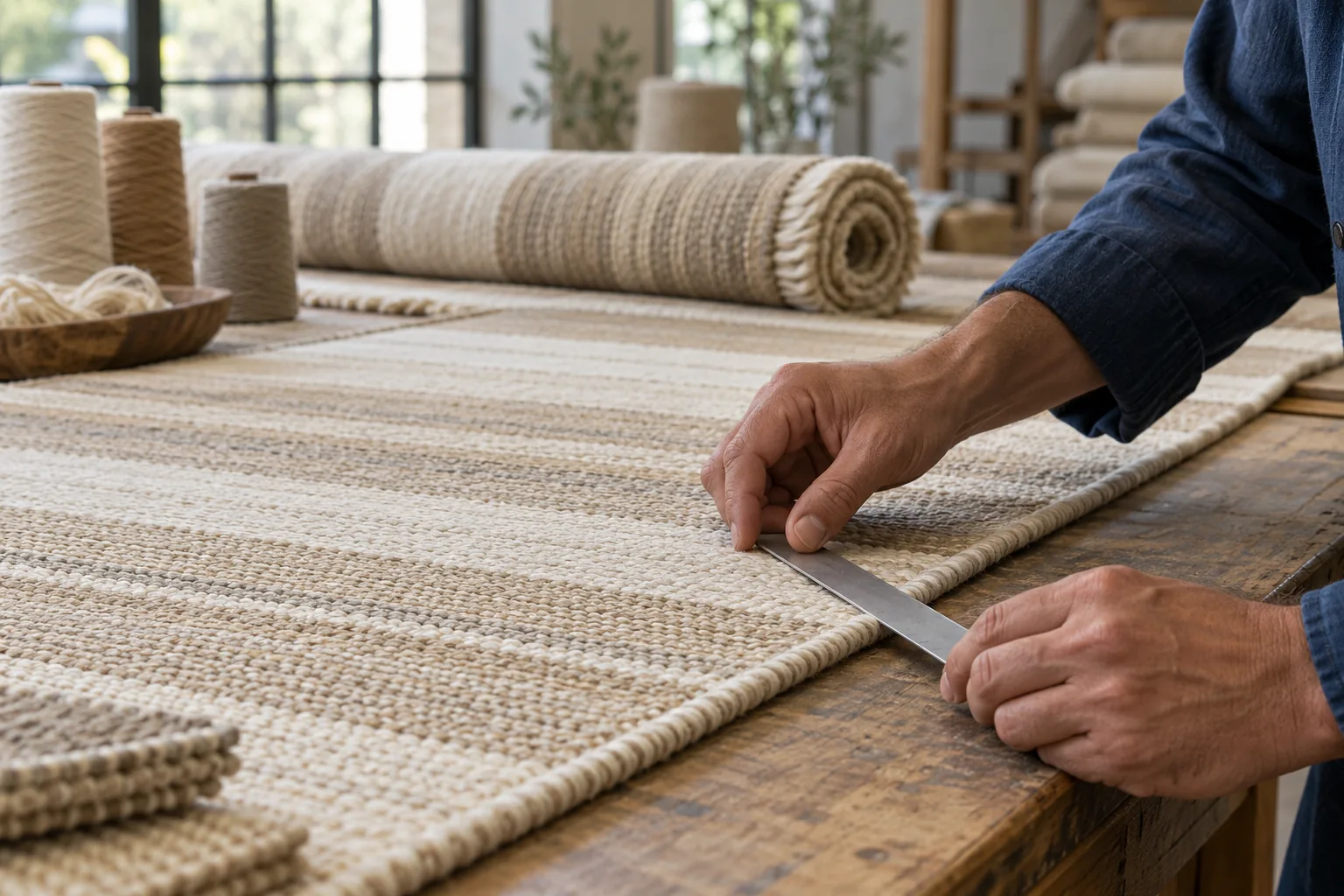
Check length and width on a suitable flat surface according to the specification. State whether fringe or other decorative edges are included. For round or shaped rugs, use the measurement points defined during approval.
Compare the results with the agreed tolerances. Do not introduce a new tolerance at the final inspection because a product is handmade. If some variation is acceptable, it should have been discussed and documented before production.
Inspect the overall outline as well as individual measurements. A rug can meet a length measurement while still having a visibly distorted corner or border. Photograph any concern with enough context to show where it occurs.
3. Compare colour, pattern and surface appearance
Review colour against the approved physical reference under consistent lighting. Record differences between units and any variation within a single rug. Phone photographs support the discussion, but they should not be the only basis for resolving a subtle shade question.
Check pattern direction, repeat, border alignment and the placement of any focal design. Compare the product at normal viewing distance and at close range. For a textured rug, turn or walk around it to understand changes caused by the viewing direction before classifying a colour concern.
Separate acceptable material character from a production defect through agreed examples. A permitted yarn variation is not blanket approval for every visible irregularity, and an inspection checklist should make that distinction clear.
4. Inspect construction, backing and edge finishing
Review the surface for visible gaps, unfinished areas or other departures from the approved sample. Check binding, serging, stitched joins and decorative edges. Inspect the reverse and record any separation or damage relevant to the construction.
For a tufted rug, include the pile profile and backing in the review. For a flatwoven rug, focus the construction checklist on the approved weave and finishing. Avoid using one generic pass/fail description for products made in different ways.
Do not pull out a raised tuft to see whether it comes loose. The Carpet and Rug Institute’s care guide advises against pulling sprouts. Record the observation and ask the supplier to assess it using the appropriate method.
5. Review cleanliness, labels and supporting evidence
Look for visible soiling, foreign material and damage before packing. If an unexpected odour or damp condition is noticed, isolate the concern for investigation rather than covering it with fragrance or closing the packaging. Record the findings and ask what corrective action is appropriate.
Confirm that the approved care information, composition description and product identification appear on the correct label. If a specific test report or certification is part of the order, verify that the document covers the relevant product, material or production scope. A general company brochure is not a substitute for the evidence requested in the purchase agreement.
Visual inspection and laboratory testing serve different purposes. QIMA’s textile-testing overview lists evaluations such as dimensional stability and colourfastness. Decide which results your order requires with the appropriate specialists; visual approval alone does not establish every performance claim.
6. Check packing as part of product approval
Review the approved roll or fold method, protective materials and packaging condition. Check whether labels remain visible and whether carton markings identify the contents correctly. Confirm the units per carton and the packed dimensions used for shipment planning.
Where a new packing method is proposed, unpack a trial unit and compare its presentation with the approved product. Investigate unwanted marks, distortion or damage before the same method is applied to the remaining order.
Use a record that leads to a decision
| Inspection area | Evidence to record | Decision required |
|---|---|---|
| Identity and quantity | SKU list, counts and carton references | Does the assortment match the order? |
| Dimensions | Measurements and agreed tolerances | Accept or refer a size deviation |
| Colour and pattern | Reference comparison and photographs | Accept or request a buyer decision |
| Construction and finish | Location and description of each concern | Rework, replace or review |
| Labels and documents | Approved artwork and relevant report references | Resolve missing or mismatched information |
| Packing | Packing photographs, count and dimensions | Approve the shipment presentation |
Agree on the sampling plan before inspection. A sample-based inspection does not mean every item has been checked, and a few selected photographs are not a substitute for a defined inspection record. If the order requires a formal acceptance-sampling standard, have the plan and acceptance criteria set by qualified personnel.

Questions buyers often ask
Is a final inspection enough on its own?
It checks the shipment at a particular stage. Sample approval and appropriate checks during production can help resolve issues earlier, especially when the order includes new designs or materials.
Should all handmade variation be accepted?
No. Define acceptable variation with the supplier using the approved sample and documented examples. Decide departures against that agreement.
What should happen when a defect is found?
Record the affected SKU, location, quantity observed and supporting evidence. Agree on corrective action, then document the follow-up check before treating the issue as closed.
Discuss inspection expectations before placing your rug order
When you contact More Textiles, include your design references, quantities and quality priorities. Ask how sample approval, inspection access, required reports and packing will be handled for the proposed order. Clear expectations give the buyer and supplier a practical basis for deciding when the goods are ready to ship.
Leave a Reply