
For an importer, retail buyer or private-label home décor brand, a cushion cover is only a successful purchase when the production batch matches the approved sample. A design can look beautiful in a product photograph yet fail in stores because the cover measures incorrectly, the zipper catches, shades vary between cartons, or the labels do not match the assortment.
This practical wholesale cushion cover quality checklist shows what to inspect before approving a bulk order from India. It covers the specification sheet, fabric and colour, stitching, closures, sample sign-off, testing, packing and final shipment records. It is intended for buying teams sourcing removable decorative covers; requirements for filled cushions or specialist contract textiles may differ.
Start with a written specification, not only a reference photograph
Before production begins, turn the design brief into a controlled document. A physical sample is valuable, but the supplier also needs a written reference that makes each approved choice repeatable for every colourway and size. If your merchandising team revises the design, issue a new version and withdraw the old one from production use.
| Specification field | What the buyer should define |
|---|---|
| Product and size | Finished cover size; measurement method; shape; intended insert size; size tolerance |
| Face and reverse | Fibre content, fabric construction, texture, weight if required, and approved fabric reference |
| Decoration | Artwork version, colour references, motif position, print/embroidery/tufting details |
| Make-up | Seam construction, piping or flange, thread colour, corner treatment and opening position |
| Closure | Concealed or exposed zipper, length, tape shade, puller type and operational requirements |
| Retail pack | Care/composition label, brand label, barcode, hangtag, folding and packaging artwork |
| Acceptance | Approved sample reference, test requirements, defect rules, inspection point and sign-off owner |
A common mistake is leaving the reverse fabric or zipper specification undefined because customers mainly see the front. Those details still affect handfeel, laundering, product safety, cost and the consistency of reorders.
The 12-point wholesale cushion-cover inspection checklist
1. Verify finished measurements and insert fit
Measure the cover in the agreed state—normally closed, laid flat, with corners aligned—and use the same method for every production check. Fit the cover over the intended insert, if applicable. Record any tolerance in millimetres or centimetres in the purchase specification rather than assuming there is a universal industry allowance. A cover that looks square when empty may pull or distort once filled.
2. Match the approved face and reverse fabric
Compare production fabric with the signed-off reference for fibre composition, weave, surface finish, visual texture and weight where specified. If a natural-fibre look is required, define how much yarn variation or slub is acceptable. No material substitution should enter bulk production without documented buyer approval.
3. Review shade consistency between lots
Compare covers under consistent lighting and against an approved physical swatch, not only a phone photograph. Examine both the same-colour run and different production batches. For multicolour collections, keep an agreed shade reference for each SKU. If colour tolerances are important, specify a suitable instrumental or visual assessment approach with the test laboratory.
4. Inspect print, embroidery and decorative placement
Check design scale, motif centring and orientation, repeat alignment, stitch density where relevant, and completeness of embroidery, tufting or embellishments. Inspect the reverse of decorative work for loose threads or exposed backing as appropriate to the agreed construction. A few millimetres of motif shift can be highly visible in a symmetrical design, so approve measurable placement limits.
5. Check seams, corners and stitch security
Look for skipped or broken stitches, puckering, uneven seam allowances, weak junctions, open ends and excessive loose threads. Turn a sample inside out to review seam finishing. Test corners gently during fitting rather than judging only the outside appearance. Requirements should vary by fabric thickness and intended product use.
6. Operate every sample zipper or closure
Open and close the zipper fully, checking alignment, smooth travel, end stops and whether lining or seam fabric becomes trapped. Confirm the visible placement, opening length and tape colour against the sample. For buttons, ties or envelope closures, confirm placement, security and practical insert access.

7. Check piping, tassels and added trims
Verify piping width, edge alignment, corner continuity and attachment security. Count tassels, fringe elements or decorative ties against the specification. Where small trims are used, ask about relevant product-safety requirements for the destination market and intended consumer group; requirements cannot be inferred from appearance alone.
8. Review surface cleanliness and defects
Inspect both faces for stains, handling marks, excess lint, oil spots, pulls, snags, visible repair work, uneven pile direction or damage caused by pressing. Create an approved defect photo library so factory and buyer use the same definitions. Some handcrafted texture is intentional; defects should be defined with the sample in mind.
9. Validate washing and colour performance where needed
If washability or colour performance is a commercial requirement, commission appropriate tests against buyer-defined thresholds. ISO 105-X12 addresses resistance to dry and wet rubbing; ISO 6330 describes domestic washing and drying procedures used for textile testing. AATCC TM8 and TM61 are additional recognised methods for crocking and accelerated laundering respectively. Choose the method and pass criteria with your laboratory and target-market requirements. These standards are testing references, not a claim that this product or supplier has passed them.
10. Verify care labels, fibre information and barcodes
Check the stated composition and care instructions against approved product information and applicable market rules. Confirm the brand label, country-of-origin wording where required, SKU, colour, size and barcode are consistent across product, retail pack and carton. One mixed barcode can lead to costly receiving or fulfilment errors even when the textile itself is perfect.
11. Inspect retail packaging and carton protection
Review the folding method, packing material, opening presentation and protection of textured surfaces. Over-compression can mark some decorative finishes. Validate how products look after a packed-and-unpacked trial; do not decide carton density only from dimensional efficiency. Confirm units per carton and whether cartons are single-SKU or pre-agreed assortments.
12. Reconcile cartons, quantities and shipping documents
Count accepted units by size, colour and SKU; reconcile the results with carton labels and the final packing list. Check carton numbering, shipping marks and any buyer-specific warehouse fields. Before shipment release, review unresolved inspection findings and obtain written acceptance of any documented concession.
Sample approval: a three-stage process for dependable bulk production
- Development sample: Review design direction, fabric, construction and price feasibility. Record requested changes in a revision log.
- Pre-production sample: Approve the complete product—including exact materials, decoration, closure, label and pack—and assign a sample or specification version number.
- First bulk output: Compare pieces taken from actual production with the approved standard before the whole order advances. Stop and correct recurring deviations early.
Keep a controlled sample with the factory and, where practical, another with the buyer or agent. Every approved change after sign-off should state what changed, who approved it and whether it affects timing, pricing or repeat-order reproducibility.
How to plan final inspection without guessing acceptance limits
An inspection plan needs more than “check quality before dispatch.” Agree the lot definition, where inspectors draw units from, which defects are critical/major/minor, how results are recorded and what happens after a failure. AQL-based sampling may be suitable for some programmes, but there is no single AQL number that should be applied automatically to every cushion cover order. The buyer, supplier and appointed inspector should agree the sampling plan and acceptance criteria before production.
- Before inspection: Share approved samples, size charts, barcodes, packaging artwork and the current specification version.
- During inspection: Select units across styles, sizes, colours and cartons rather than examining only factory-presented examples.
- If defects appear: Separate affected lots, identify root cause, document repair or replacement actions and reinspect as agreed.
- Before release: Sign off the inspection outcome together with an accurate packing list and any approved exceptions.
Example: creating a concise buyer approval sheet
| Checkpoint | Approval evidence | Decision |
|---|---|---|
| Size and insert fit | Flat measurement + insert-fit photograph | Pass / revise |
| Fabric and shade | Fabric card and signed shade reference | Pass / revise |
| Closure and seams | Inside-out photos and zipper operation video | Pass / revise |
| Decoration | Motif measurement and placement reference | Pass / revise |
| Retail readiness | Approved label, barcode and packaging mock-up | Pass / revise |
| Shipping | Pack-out photos, carton count and final inspection record | Release / hold |
This sheet is designed to be short enough for a busy buying team to use while still giving the production team clear instructions. Add fields for SKU, revision, approval date and approver name; a “pass” without a traceable reference is difficult to reproduce in a later season.
Plan collections with repeat ordering in mind
Wholesale buyers often source cushion covers alongside rugs, throws and other home textiles. Coordinated collections can share a colour story, but each product type still needs its own performance and care specifications. A cushion cover should not inherit a rug fabric test requirement by accident, and buyers should not assume identical colours will appear identical across different textile constructions.
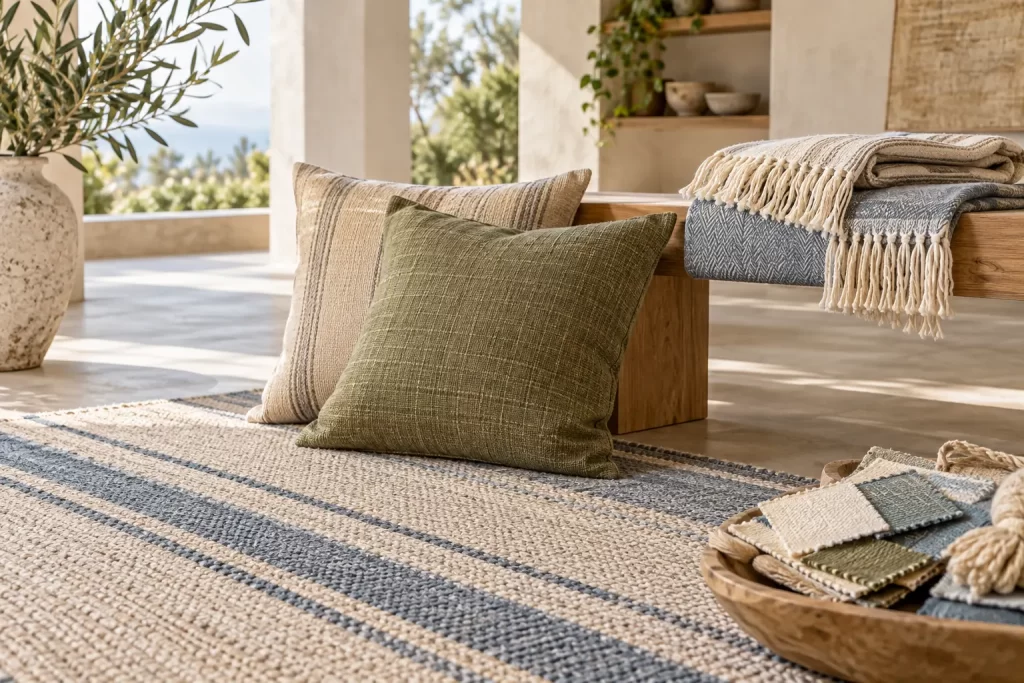
For a repeat programme, retain the latest approved tech pack, physical colour standard, labels, artwork files, carton plan and corrective-action log. This reduces the risk of a second order looking close—but not close enough—to the first.
Questions wholesale buyers frequently ask
What size tolerance should a wholesale cushion cover have?
There is no single tolerance suitable for every construction, material and market. Agree a specific tolerance and measurement method in the purchase order and confirm it against the insert fit and approved sample.
Should an importer request a physical pre-production sample?
For a custom design or first-time supplier programme, a physical pre-production sample provides a strong control point. Remote approvals using detailed measurement records and videos may support some reorders, but should not replace critical material or performance verification when required.
Is a finished-product inspection enough?
No single final inspection can undo widespread material or construction errors. Approving the first bulk output and checking production in progress can catch issues before they affect most of the lot.
Which fabric tests should be requested?
Select tests based on fabric composition, care claims, colour, intended use and destination-market rules. Rubbing and washing performance are common considerations; other needs could include dimensional change, pilling or additional regulatory testing. Ask your testing partner to specify the method and acceptance criteria.
What information should I send when asking an Indian supplier for a quotation?
Share product photos or artwork, target finished sizes, estimated quantity per colourway, material preference, requested label/packaging, destination market, intended delivery window and any required testing. Ask the supplier to confirm minimum quantities and production lead time for that particular programme rather than assuming fixed values.
A practical next step for sourcing cushion covers from India
Before committing to a wholesale cushion-cover order, use this checklist to identify specification gaps and sample-approval decisions. A well-defined brief helps both the buying team and manufacturer quote more accurately, control rework and protect the finished collection.
If you are planning a cushion-cover range, contact More Textiles with your target styles, quantities, fabric references and market requirements to discuss suitable product options and sampling. Product-specific capabilities, MOQ, pricing and timing should be confirmed directly before placing an order.
Leave a Reply