For a retailer or importer, a rug order is not finished when the design is approved. It is finished when the shipped pieces match the agreed specifications closely enough to be displayed, sold and reordered with confidence. A practical rug quality control checklist helps buyers catch issues before dispatch—when they are usually easier to document and resolve.
This guide is for sourcing teams working with rug manufacturers in India, including handwoven, hand-tufted, jute, cotton and blended constructions. The checks below are a starting framework, not a universal pass/fail standard. Agree methods, tolerances and inspection levels with your supplier for each product.
Start with a signed-off reference sample
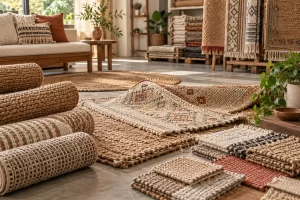
Before bulk production, approve a physical “golden sample” or clearly documented reference sample. Record its design code, fibre content, construction, size, colour, finish, backing, edge treatment and weight. Photograph both sides in consistent light and note any intentional variation.
A beautiful showroom sample is not enough on its own. The approved reference and written specification should be usable by the production team, inspection team and buyer—even when they are in different locations.
12 quality checks for wholesale rugs
1. Fibre composition and construction
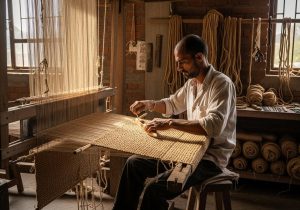
Verify the agreed yarn or fibre blend and construction: for example, braided jute, cotton flatweave, handloom or hand-tufted wool. Confirm the face, foundation and backing separately, since the visible material does not always describe the complete product.
2. Length, width and shape
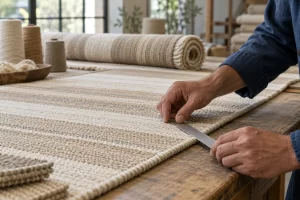
Measure finished rugs on a flat surface using the method agreed in the purchase order. For round rugs, check diameter at more than one position; for rectangular rugs, check diagonals when squareness matters. Record actual dimensions and compare them with the agreed tolerance, not a guessed industry figure.
3. Colour consistency
Compare pieces against the approved colour reference under consistent lighting. Natural fibres can vary in shade; the question is whether that variation falls within the approved appearance range. Watch for unexpected streaks, mismatched yarn lots and noticeably uneven colour distribution.
4. Pattern placement and design accuracy
Check borders, stripes, motifs and repeat alignment. Confirm whether the design is meant to be symmetrical, deliberately irregular or hand-crafted with acceptable variation. For coordinated size ranges, inspect how the pattern scales between sizes.
5. Weave density or pile consistency
Examine loose areas, uneven rows, missed stitches, unexpected gaps, pile-height differences or visibly inconsistent tufting. The exact inspection method depends on construction; do not apply a tufted-rug check unchanged to a flatweave or braid.
6. Surface defects and loose fibres
Look for pulls, snags, contamination, unwanted protruding ends, bald areas and excessive loose fibre. Some initial shedding can be characteristic of a material, but the allowable level should be agreed for the specific style and its retail claims.
7. Edges, binding and fringe
Inspect corner finishing, overlocking, hand binding, fringe security and edge shape. Weak or inconsistent edge finishing can undermine the appearance of an otherwise attractive rug and may cause complaints after handling.
8. Backing and stability
Where backing is specified, check that it is correctly fitted, attached and compatible with the intended use. Do not claim slip resistance merely because a rug has a backing. If a specific grip or safety claim is planned, commission suitable product testing.
9. Odour, stains and moisture condition
Check for visible staining, unexpected odours and indications of poor storage or dampness. Natural-fibre rugs are especially sensitive to unsuitable moisture conditions. Agree appropriate inspection, handling and packing requirements rather than inventing one universal moisture threshold.
10. Weight and hand feel
Compare finished weight and tactile appearance with the approved sample and agreed specification. Large differences can indicate changes in construction, materials or finishing, although normal variation should be defined in advance.
11. Labelling, care claims and traceability
Check fibre descriptions, care labels, SKU codes, country-of-origin statements, carton references and any buyer-specific tags. Make sure claims such as “machine washable”, “non-slip” or “organic” are supported for the actual product and intended destination market.
12. Packing and carton presentation
Confirm the approved folding or rolling method, protective wrapping, carton quantity, external markings and any moisture protection requested. Match packed cartons to the order’s size and colour breakdown. Good inspection ends with a shipment-ready record, not merely a visual check of unpacked pieces.
What should a pre-shipment rug inspection report include?
Ask your supplier or independent inspection provider to document the purchase-order reference, SKU and lot details, sampled quantities, actual measurements, visible defects, photos, agreed acceptance criteria and corrective actions. Specify whether the check is during production, at final packing or both.
Example inspection sequence: verify the approved sample → select pieces using the agreed sampling plan → record the 12 checks above → photograph any non-conformities → agree rework or replacement → reinspect where required → confirm packing and dispatch readiness.
For larger orders, discuss a formal sampling and acceptance plan with a qualified inspection specialist. Do not assume a particular acceptable quality limit (AQL), testing standard or sample quantity applies automatically to every rug programmed.
Five questions to resolve before production starts
- Which physical sample and technical specification are the final references?
- Which visual variations are acceptable, and which count as defects?
- Who approves colour, dimensions, backing and care-label wording?
- What inspection evidence is required before the final payment or dispatch decision?
- Who covers rework, replacement and repeat inspection if agreed tolerances are missed?
Quality control for jute, cotton and tufted rug collections
The core checklist is shared, but priorities differ. For jute rugs, look closely at natural shade variation, texture, edge security and moisture handling. For cotton flatweaves, focus on weave alignment, shape, dye performance and care instructions. For hand-tufted rugs, consider pile finish, carving or pattern definition, tuft consistency and backing or adhesive characteristics where applicable.
If you’re comparing fibre choices before placing an order, read our jute vs cotton rugs guide for wholesale buyers. For planning a jute collection, see the wholesale jute rugs sourcing guide.
FAQs: Wholesale rug inspection
When should wholesale rugs be inspected?
Agree checkpoints before production begins. For many orders, sample approval, an in-production review and a final pre-shipment check offer useful opportunities to identify issues; the appropriate plan depends on complexity and risk.
Is a factory’s own QC report enough?
A clear factory report can be useful, but some buyers also request independent inspection. The choice should reflect order value, supplier history, product risk and contractual requirements.
Can handmade rugs have size and colour variations?
Yes, some variation can be a normal feature of handmade production. It should still be bounded by the tolerance and appearance standard agreed with the buyer.
What information should I send when requesting rug samples?
Share the intended market, fibre and construction, target sizes, colour reference, backing requirements, care expectations, estimated quantity and desired packing format. Mark any must-pass tests or buyer compliance requirements clearly.
Source rugs with a clearer quality brief
A well-documented rug inspection plan protects both the buyer and the manufacturer. It creates a common reference for sampling, production decisions and repeat orders. If you are planning a rug range, contact More Textiles in Panipat, India with your specifications and reference images to discuss suitable constructions and the next steps for sampling and wholesale enquiries.
Leave a Reply