For importers and home-décor retailers, the choice between jute vs cotton rugs is not simply about which natural fibre looks better. The material affects how a rug feels underfoot, how it photographs, the care instructions you give customers and the specifications you need from a manufacturer.
Both materials have a place in a well-planned wholesale collection. Jute is known for its earthy texture and natural colour variation, while cotton can support softer, more colourful flatweaves and casual styles. The best choice depends on your customer, intended room and product construction.
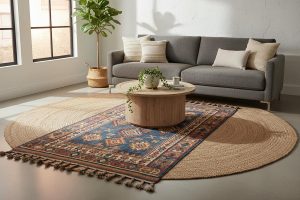
Jute vs Cotton Rugs: Quick Comparison for Wholesale Buyers
| Buying consideration | Jute rugs | Cotton rugs |
|---|---|---|
| Look and feel | Textured, earthy, often visibly braided or woven | Generally softer hand; supports many woven patterns |
| Colour direction | Natural straw, tan and neutral tones; dyed options vary by design | Broad colour and print possibilities, depending on yarn and process |
| Typical styles | Braided, chunky weave, flatweave and blended constructions | Flatweave, rag rugs, dhurries and selected tufted constructions |
| Moisture and care | Highly sensitive to prolonged wetness; usually dry-care focused | Care depends on backing, dye, size and construction; not every cotton rug is machine washable |
| Retail positioning | Organic-looking neutrals, layering and texture-led collections | Casual comfort, colour-led ranges and easy-to-restyle rooms |
| Key sampling check | Texture, shedding, edge finish and moisture response | Colour fastness, dimensional change and finish after care testing |
Important: These are material-level tendencies, not universal performance promises. A tightly woven cotton rug and a loosely constructed jute rug can perform very differently. Approve the actual sample and care instructions before finalising your range.
What Makes Jute Rugs Attractive for a Retail Collection?
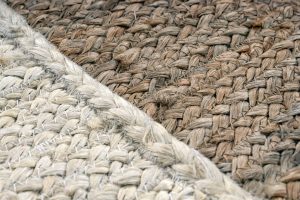
Jute is a plant-based natural fibre that gives rugs a recognisable textured appearance. It works particularly well in coastal, rustic, Scandinavian and contemporary collections where buyers want warm neutral colours and visible material character.
For wholesale buyers, a natural-jute capsule can include different shapes and weaves without changing the overall visual story. Round braided rugs make good accent pieces; rectangular flatweaves offer a quieter base for living-room displays; jute-cotton blends can introduce contrast or a softer touch.
The practical limitation is moisture. Jute absorbs humidity and liquid spills, so retailers should avoid implying that all jute rugs are suitable for wet rooms or machine washing. Ask your supplier for care guidance that matches the actual construction.
Where Do Cotton Rugs Fit Better?
Cotton rugs are useful when a collection calls for a lighter visual effect, a softer hand or more colour variation. Flatwoven cotton dhurries, for example, can carry stripes, geometric designs and seasonal palettes that pair easily with cushion covers and throws.
Some cotton flatweaves can be produced with washable-care positioning, but “cotton” does not automatically mean “machine washable.” Backing, dye fastness, rug size and the finishing method all matter. If washability is part of your retail offer, make it a testable specification rather than a marketing assumption.
For retailers serving households that prioritise easy care, cotton may be worth considering—provided the approved rug meets the care performance you intend to advertise.
Should a Buyer Stock Jute, Cotton or a Blend?
Rather than selecting one fibre for an entire range, consider assigning each a clear merchandising role:
- Jute: a texture-led foundation for natural, neutral and layered interiors.
- Cotton: a softer, colour-led option for everyday casual home décor.
- Jute-cotton blends: a middle ground when a design needs visible texture with a different hand or pattern effect.
Use approved samples to establish whether a blend meaningfully meets the intended brief. Blend composition alone cannot guarantee softness, durability or washability.
Seven Specifications to Confirm Before Placing a Bulk Rug Order
When comparing quotations from rug suppliers in India, align the specification sheet before comparing unit prices.
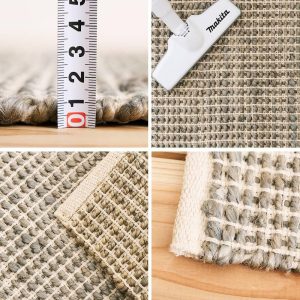
- Fibre composition: confirm 100% jute, 100% cotton or the exact blend ratio; distinguish face yarn from backing.
- Construction: identify braid, handloom flatweave, pit loom, tufting or another production method.
- Dimensions and tolerances: agree the ordered size, acceptable variance and shape measurements.
- Weight and hand feel: record target weight per piece or square metre and approve the tactile reference sample.
- Colour and testing: document shade approvals and any colour-fastness or performance tests required for your market.
- Edge, backing and labels: specify binding, fringe, backing, product labels and care-label wording.
- Packing and shipment: agree folding or rolling, moisture protection, carton marking and inspection criteria.
Questions to Ask a Rug Manufacturer in India
Before confirming a wholesale programme, ask whether the supplier can sample your target weave, sizes and colours; what minimum order quantities apply per design and size; which quality checks are included; and how reorders are handled. Request production lead times and export packing details for your specific enquiry rather than relying on generic industry estimates.
If your business requires social-compliance or material certifications, request current documents and clarify which facility, process and products they cover. Marketing language such as “eco-friendly” or “sustainable” should be backed by specific, accurate evidence.
For more on construction choices and order preparation, see our wholesale jute rugs buyer’s guide and our article on sourcing handloom rugs from India.
Why Discuss Your Natural-Fibre Rug Range with More Textiles?
Based in Panipat, India, More Textiles works with international buyers sourcing rugs and home furnishings, including jute and cotton area rugs. A good first enquiry includes the target destination market, estimated quantities, size mix, desired construction and reference images.
That information helps the team discuss suitable manufacturing options and prepare a relevant sample and quotation conversation—without suggesting that every design has the same minimum order quantity or lead time.
Frequently Asked Questions
Are jute rugs better than cotton rugs?
Neither is universally better. Choose jute for an earthy, texture-led look and cotton when a softer hand or more colour options are central to the design. Construction and approved testing determine actual product performance.
Are cotton rugs always washable?
No. Machine washability must be confirmed for the specific rug, including dyes, size, backing and finish. Never claim a rug is washable without appropriate testing and care instructions.
Can jute rugs be used in damp rooms?
Jute is moisture-sensitive, so prolonged humidity or water exposure can create problems. Match the product to the intended use and follow the manufacturer’s care recommendations.
Can I order custom sizes or private-label natural-fibre rugs?
Customisation and private-label options vary by construction, quantity and production capacity. Share the required dimensions, branding details and order plan with the manufacturer for confirmation.
Plan Your Next Wholesale Rug Collection
The strongest choice is the one your retailer can describe accurately and your customer can use confidently. Start with a clear style direction, compare physical samples and lock in the specifications before scaling an order.
Planning a jute, cotton or blended rug collection? Explore More Textiles’ rug and home-textile categories and contact the team with your brief for a discussion about sampling and wholesale enquiries.
Leave a Reply